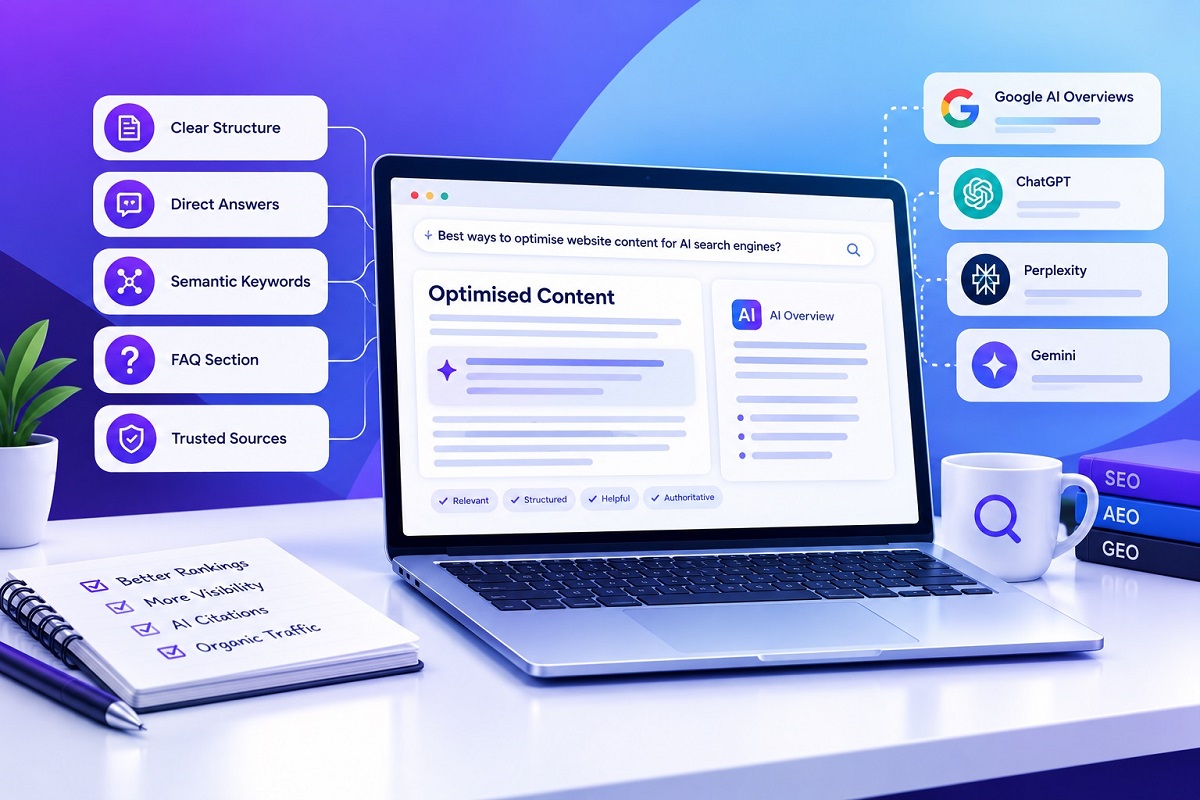
Search behaviour is changing as more people use AI-powered platforms to discover businesses, compare products and find answers to everyday questions. Tools such as ChatGPT, Google AI Overviews, Gemini and Perplexity are changing how information is presented, making it increasingly important for businesses to optimise their websites for both traditional search engines and AI-driven search experiences.
Traditional SEO remains essential, but businesses must also focus on creating clear, useful and trustworthy content that AI systems can understand and reference. This is where Generative Engine Optimization (GEO) becomes valuable.
Understanding how to optimise website content for AI search engines can help businesses improve their online visibility, strengthen their digital authority and reach potential customers across different search experiences. This guide explores practical content optimisation techniques that support discoverability in AI-powered search.
What Is AI Search Optimisation?
AI search optimisation involves improving website content so that search engines and AI-powered platforms can understand its meaning, identify relevant information and potentially use it when generating answers.
Unlike traditional search experiences, which often present a list of links, AI search tools may summarise information from multiple sources into a conversational response. Depending on the platform and query, these responses may include citations, links or brand recommendations.
This means businesses should focus on more than keyword placement. Content should answer real questions, explain concepts clearly, demonstrate expertise and provide information that users can trust.
AI search optimisation works alongside established SEO practices, including technical accessibility, relevant internal links, helpful content and strong website performance.
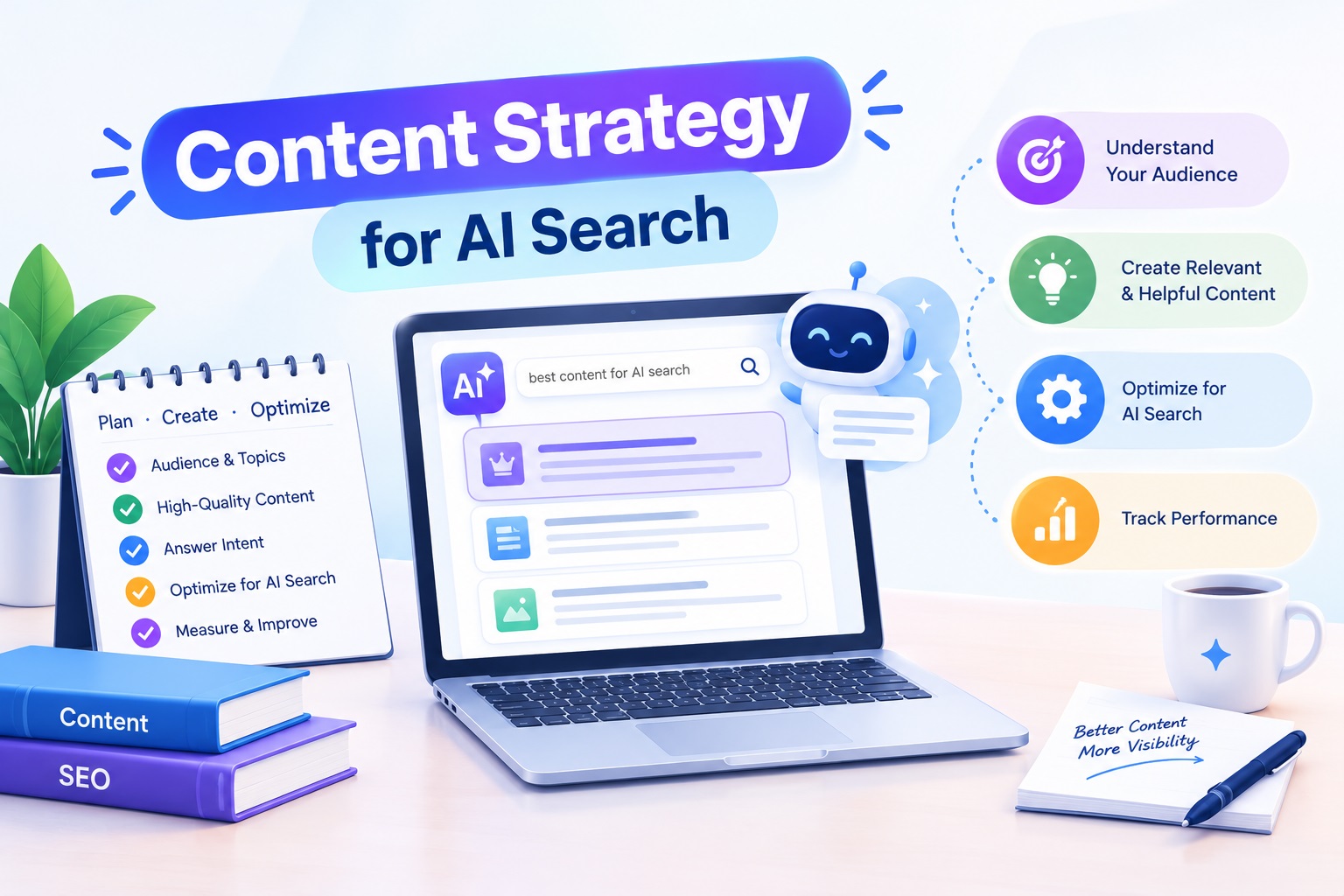
1. Understand Your Audience and Search Intent
The first step in learning how to optimise website content for AI search results is understanding what your target audience wants to know.
People often use conversational questions when interacting with AI tools. Instead of searching only for a broad phrase such as “SEO services UK”, they might ask, “How can a small business improve its Google rankings without increasing its marketing budget?”
Research the questions your customers ask before choosing a service or product. Consider their problems, concerns, comparisons and purchasing decisions.
Organise these questions into informational, commercial and transactional topics. Then create content that answers each question accurately and directly.
For example, a digital agency could publish guides explaining technical SEO, local search optimisation, website speed and content strategy. These resources help users understand a topic while establishing the website as a useful source of information.
2. Create Helpful, Clear and Well-Structured Content
One of the best ways to improve website visibility in AI search is to publish content that provides genuine value rather than simply repeating popular keywords.
Start each page with a clear explanation of its subject. Use descriptive headings, concise paragraphs and logical sections to make important information easy to locate. Where appropriate, provide definitions, practical examples, comparisons and step-by-step instructions.
Avoid unnecessary introductions that delay the answer. If a page addresses a specific question, answer it early and expand on the details in the following sections.
For example, an article about local SEO should explain what local SEO is, why it matters and how businesses can improve their local visibility before moving into more advanced techniques.
These practices make content easier for readers to navigate and help automated systems interpret its structure. However, no particular format guarantees inclusion in AI-generated responses.
3. Use Conversational Questions and Natural Keywords
AI search platforms are frequently used for detailed, natural-language questions. Businesses should therefore consider the complete range of queries their audience might use.
To understand how to make website content AI search friendly, incorporate relevant questions into headings and answer them in the surrounding paragraphs.
For example, an article about website performance could include questions such as:
- How can I improve my website loading speed?
- Why is my website losing organic traffic?
- Which technical SEO issues affect search visibility?
- How can small businesses improve their online presence?
Use these questions where they fit the subject naturally. Include related terminology and synonyms to provide context, but avoid keyword stuffing.
Keyword research should remain part of the process. The objective is to connect your content with relevant search intent while ensuring that the writing remains clear, natural and useful.
4. Optimise Content for ChatGPT and Google AI Overviews
Businesses increasingly want to understand how to optimise content for ChatGPT and Google AI Overviews. Although these platforms operate differently, several established content practices can support discoverability across AI-powered search experiences.
Publish accurate, comprehensive information that directly addresses the user’s question. Support important claims with reliable sources, provide relevant examples and keep factual details up to date.
Make your website accessible to search crawlers and review the technical requirements of the platforms you want to reach. For Google AI Overviews, established Google Search eligibility and indexing practices remain important. For other AI platforms, review their current documentation and crawler policies.
Where appropriate, include original research, expert commentary, useful statistics and first-hand insights. Content that offers something beyond a generic summary gives readers a stronger reason to trust and reference your website.
Remember that appearing in ordinary search results does not guarantee that a page will be selected for an AI-generated answer.
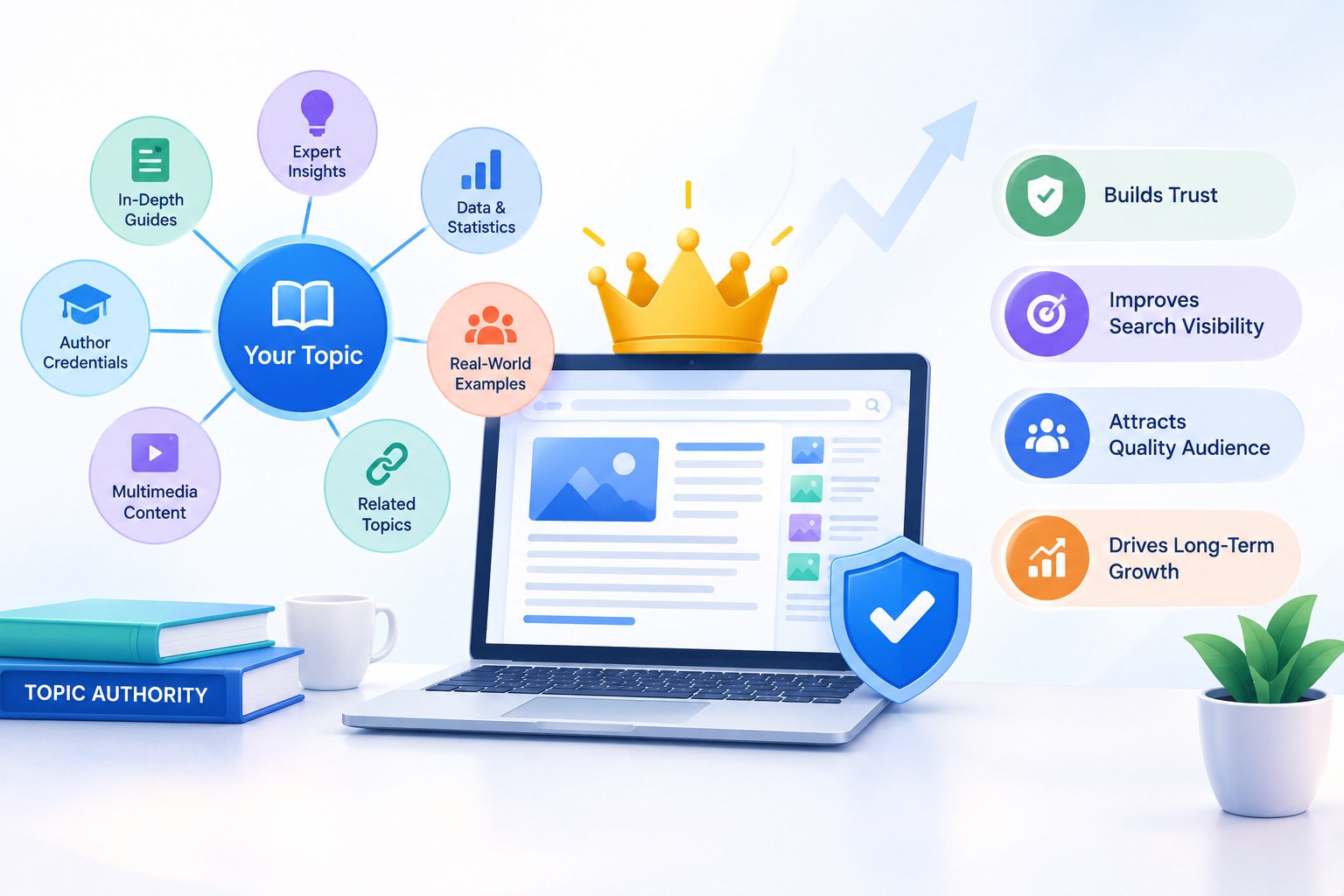
5. Strengthen Content Authority and Trust
Trust is an important consideration for both readers and search systems. Websites should clearly communicate who created their content, what expertise supports it and where important information originated.
Add relevant author biographies, company information and contact details. Cite authoritative sources when discussing statistics, research or industry developments. Review older pages regularly to correct outdated information.
For service businesses, demonstrate expertise through detailed service explanations, case studies, genuine customer experiences and practical examples where available.
Avoid unsupported claims, fabricated statistics and exaggerated promises. For example, an SEO agency should not guarantee first-page rankings or claim that a specific GEO technique guarantees AI recommendations.
A consistent focus on accuracy, transparency and helpful information supports a stronger overall content strategy.
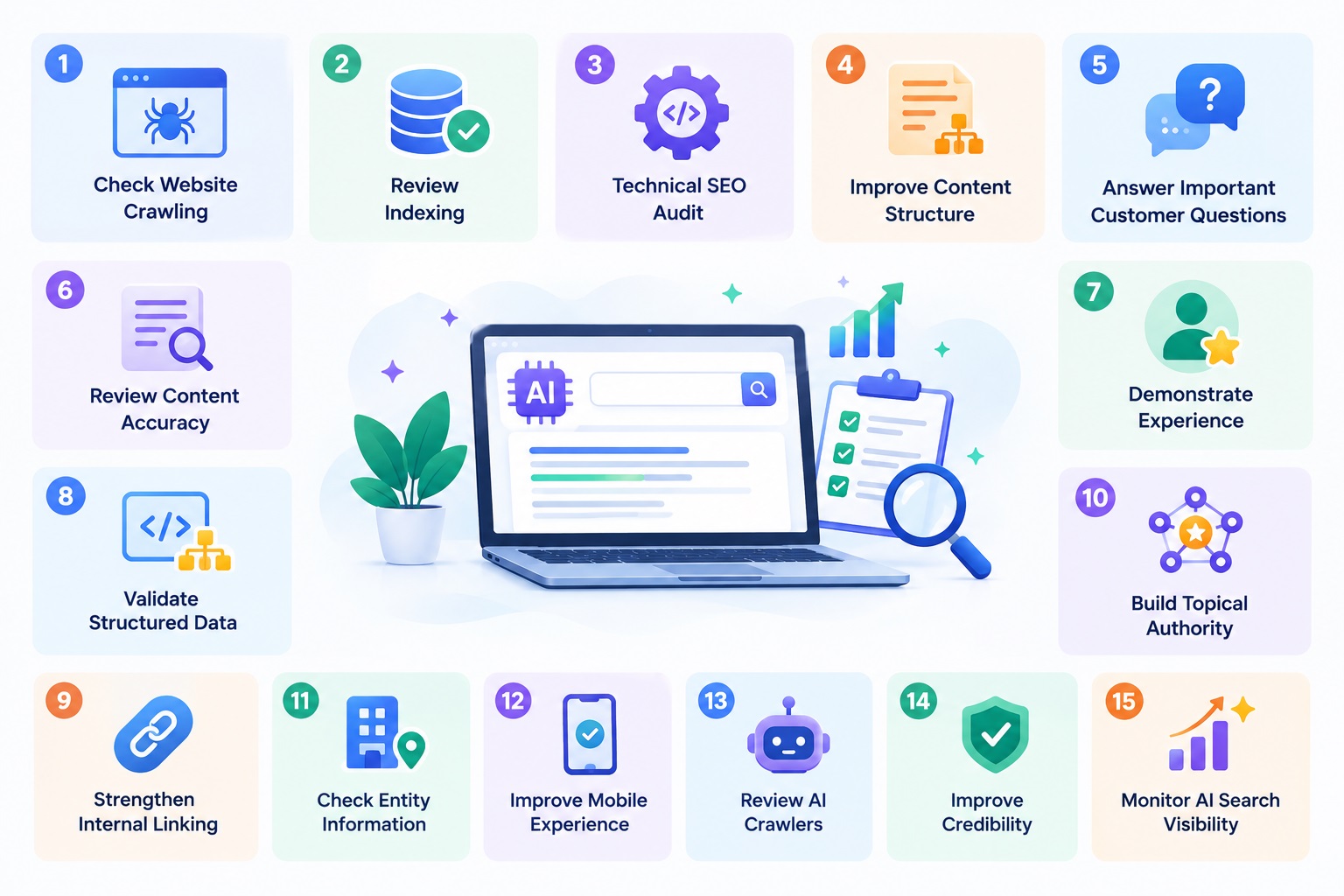
6. Apply On-Page SEO Techniques for AI-Powered Search Engines
Traditional SEO remains a foundation of AI search optimisation. Search engines need to discover, crawl and understand website pages before they can consider them for relevant search experiences.
Effective on-page SEO techniques for AI-powered search engines include writing descriptive page titles, creating useful meta descriptions, using logical heading structures and adding relevant internal links.
Use one clear H1 heading for the main page topic, followed by relevant H2 and H3 headings. Link related articles together so visitors can explore connected subjects and search systems can discover additional content.
Optimise images with descriptive alternative text where appropriate. Use clean URLs and ensure important information is available in crawlable page content.
Also review mobile usability, page loading performance, HTTPS security and indexing issues. These improvements support a better user experience and help maintain a technically accessible website.
7. Use Structured Data Where Relevant
Structured data helps search engines interpret specific information about a webpage. Depending on the page, relevant schema types may include Article, Organization, LocalBusiness, Product or BreadcrumbList.
Implement valid structured data that accurately reflects the visible content on your website. Test it using Google’s Rich Results Test and Schema Markup Validator where appropriate.
Structured data is not a shortcut to AI visibility, nor does adding schema guarantee that AI platforms will cite your website. Its primary purpose is to communicate information in a consistent, machine-readable format.
Combine structured data with useful written content, clear site architecture and accurate business information to strengthen your website’s overall search readiness.
8. Follow the Best Content Optimisation Strategies for Generative AI Search
The best content optimisation strategies for generative AI search focus on usefulness, clarity, credibility and topical depth.
Build topic clusters around your main services or areas of expertise. For example, a digital marketing agency could create a central SEO guide supported by articles on keyword research, technical SEO, local SEO, content optimisation and performance measurement.
Connect these articles using relevant internal links and ensure each page offers distinct value. Update content when recommendations, facts or industry practices change.
You should also consider whether your content provides original insights rather than repeating information already available everywhere. Detailed explanations, real examples and well-supported analysis can make a resource more useful to its intended audience.
Review performance regularly and improve pages based on user needs, available analytics and emerging content gaps.
9. Measure AI Search Visibility and Improve Your Strategy
Publishing optimised content is only one part of the process. Businesses should also monitor whether their content attracts relevant visitors and gains visibility across search platforms.
To understand how to improve website visibility in ChatGPT responses, test realistic customer questions and record whether your brand appears, whether your website is cited and how accurately your business is described. Repeat the tests over time because AI responses can vary.
Use Google Search Console to monitor organic impressions, clicks and search queries. Google Analytics 4 can help you analyse website engagement, identifiable referral traffic and conversions.
Dedicated AI visibility tools may provide additional reporting on brand mentions, citations and competitor presence. Select tools based on the platforms you target and the reporting features you actually need.
Use these findings to identify missing topics, improve existing pages and refine your content strategy. Treat AI visibility measurements as indicators rather than guaranteed measures of business impact.
10. How to Optimise Website Content for Generative Engine Optimization
Generative Engine Optimization involves improving a brand’s chances of being discovered, understood and referenced in AI-generated responses. To understand how to optimise website content for Generative Engine Optimization, combine established SEO fundamentals with content designed to answer specific questions thoroughly.
Begin by identifying the questions that matter most to your customers. Create useful pages that answer those questions, demonstrate relevant expertise and provide clear supporting information.
Maintain consistent business details, strengthen internal linking, implement appropriate structured data and keep your website technically accessible. Measure brand mentions, citations, referral traffic and business enquiries wherever reliable data is available.
The goal is not to manipulate AI systems but to make your website a valuable, accurate resource for people seeking information.
Improve Your AI Search Visibility with SEOBuckinghamshire
AI-powered search is creating new opportunities for businesses to connect with potential customers, but successful optimisation requires a long-term approach. Strong technical SEO, helpful content, clear website structure and credible information remain essential components of an effective digital strategy.
SEOBuckinghamshire helps businesses strengthen their online presence through SEO, website optimisation and digital marketing services. By combining established SEO practices with a thoughtful GEO strategy, businesses can build a stronger foundation for visibility across traditional and AI-driven search experiences.
Ready to improve your website’s search performance? Focus on answering customer questions, publishing trustworthy content and measuring meaningful results. Consistent improvements can help your business build digital authority and adapt as search technology continues to evolve.
If you’re looking for expert SEO services to help manage content audits, updates, and optimization strategies, reach out to SEO Buckinghamshire—a leading digital agency in the UK with over 10 years of experience in SEO, web design, and digital marketing.