Search behaviour is changing rapidly. People are no longer relying only on traditional search engine results to find information, compare services, and make purchasing decisions. They are also asking AI-powered platforms such as ChatGPT, Google AI Overviews, Gemini, and Perplexity to provide direct answers and recommend useful sources.
This shift creates a new opportunity for businesses that want to increase online exposure. When an AI search platform references a website in its answer, that citation can help users discover the brand and explore its content. However, appearing in AI search results requires more than publishing articles and adding keywords.
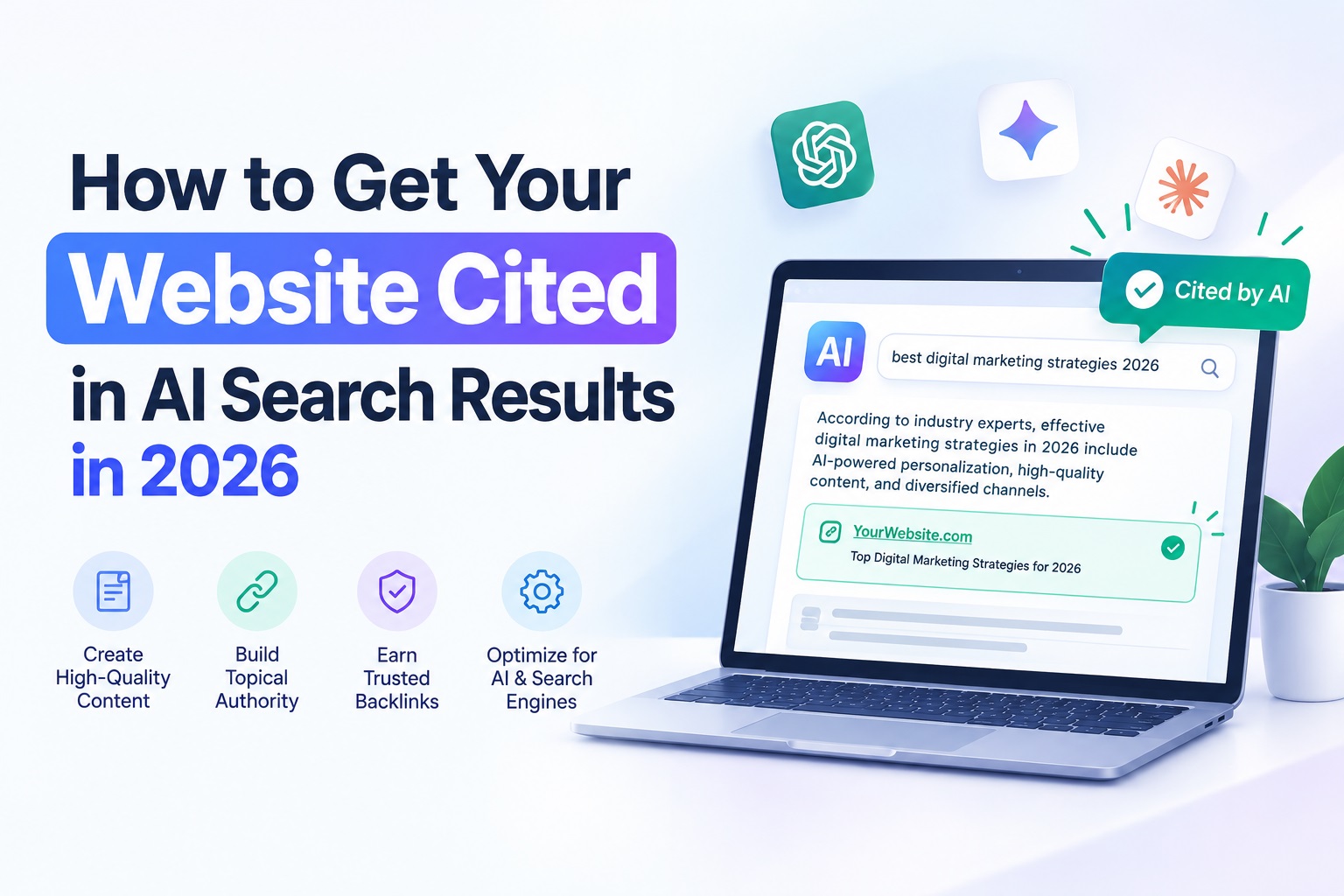
If you want to understand how to get your website cited in AI search results in 2026, the best approach is to combine established SEO principles with clear, trustworthy, well-structured content that genuinely answers users’ questions.
What Are AI Search Citations?
AI citations occur when an AI-powered search experience references or links to a website as a source for its answer. Depending on the platform, a citation may appear as a clickable link, a source card, or a reference alongside an AI-generated response.
Unlike traditional search results, which generally display a list of pages, AI search results may summarise information from several sources. This makes source selection, factual accuracy, relevance, and content clarity especially important.
For businesses, AI citations can support brand awareness, referral traffic, and credibility. However, a brand mention does not always include a clickable link, and being cited does not guarantee more visitors or higher sales.
1. Publish Helpful, Original and Reliable Content
One of the most effective ways to improve your chances of receiving AI citations is to create content that offers genuine value. AI systems need useful information to answer questions, so pages that explain a subject clearly and provide relevant evidence can be valuable sources.
Avoid publishing generic articles that repeat information already available across dozens of websites. Instead, include original research, practical examples, expert insights, case studies, comparisons, or specific recommendations that readers cannot easily find elsewhere.
For example, an SEO agency could publish a detailed website audit checklist, explain common technical SEO problems, or share anonymised findings from its own projects. These resources provide concrete information that may be useful when AI systems answer related questions.
To create citation-worthy content, make sure every page serves a clear purpose. Answer the main question, support important claims with reliable sources, and update information when it changes. Originality and usefulness should come before the number of keywords included.
2. Apply Generative Engine Optimisation (GEO)
Generative engine optimisation, commonly called GEO, focuses on improving how a brand’s content can be discovered, understood, and referenced in AI-generated answers.
Traditional SEO remains important because search engines still need to discover and index relevant pages. GEO builds on that foundation by encouraging clear explanations, credible evidence, meaningful context, and content that directly addresses user questions.
Understanding how generative engine optimisation helps websites get AI citations starts with recognising that there is no guaranteed formula for inclusion. Different platforms use different retrieval systems, sources, and ranking processes.
To strengthen your GEO strategy, organise articles around specific topics, explain important concepts in straightforward language, support factual statements with evidence, and maintain consistent information about your business across your website and reputable external sources.
The goal is not to manipulate an AI system. It is to make your website a genuinely useful and reliable source of information.
3. Make Your Website Technically Accessible
Even excellent content has limited value if search engines cannot access or understand it. Technical SEO is therefore a fundamental part of AI search optimisation.
Check that your important pages return successful HTTP responses, are not accidentally blocked by robots.txt, and do not contain incorrect noindex directives. Submit an XML sitemap through Google Search Console and monitor indexing problems.
Review your robots.txt configuration and the access requirements of the AI and search crawlers relevant to your goals. Different platforms use different crawlers and access rules, so allowing one crawler does not automatically make your content available to every AI service.
Also improve page speed, mobile usability, internal linking, and URL consistency. Use descriptive page titles and logical heading structures. Where appropriate, implement relevant structured data, such as Article, Organization, Product, or LocalBusiness schema, ensuring that the markup accurately reflects visible page content.
These steps help build a technically sound foundation for website visibility across traditional and AI-powered search experiences.
4. Structure Content to Answer Questions Directly
Clear formatting makes content easier for people to scan and can help automated systems identify relevant information.
If you want to understand how to structure website content for AI-generated answers, start by placing a direct, useful response near the beginning of each major section. Follow it with explanations, examples, supporting details, and relevant evidence.
Use descriptive H2 and H3 headings that reflect the questions readers are likely to ask. Keep paragraphs focused and explain technical terms when necessary. Use tables for meaningful comparisons and numbered steps when describing a process.
For example, an article about local SEO could include a section titled “How can a small business improve local search visibility?” The section should immediately answer the question before explaining Google Business Profile optimisation, local landing pages, customer reviews, and other relevant actions.
This approach also helps answer how to make website content easier for AI search engines to cite: provide clear statements, specific information, and enough context to understand each claim without relying on vague wording.
5. Optimise for Google AI Overviews
Google AI Overviews provide AI-generated summaries for certain searches and may include links to relevant sources. Inclusion is not guaranteed, and there is no separate optimisation trick that ensures a page will appear.
If you want to learn how to make your website appear in Google AI Overviews, begin with standard Google Search requirements. Your pages should be indexable, accessible, relevant to the search intent, and useful to readers.
Develop comprehensive content that answers related questions and demonstrates first-hand knowledge where appropriate. Use accurate headings, descriptive internal links, and credible external references. Ensure that important information is available in crawlable text rather than relying entirely on images or inaccessible interactive elements.
Google’s established SEO practices remain relevant to its AI search experiences. You do not need special AI schema or a separate technical markup format specifically for AI Overviews.
6. Improve Your Chances of Being Cited by ChatGPT and Perplexity
Businesses often ask how to get cited in ChatGPT search results or how to get cited by Perplexity AI search. The practical starting point is to make useful website content discoverable and relevant to the questions these platforms answer.
For ChatGPT search, check the applicable OpenAI crawler and search-access documentation. OpenAI identifies OAI-SearchBot as a crawler associated with search visibility. Review your site’s access rules and server logs where available, and avoid assuming that allowing a crawler guarantees a citation.
For Perplexity, review its current publisher and crawler guidance, including the access requirements associated with PerplexityBot. Make sure your website is technically accessible under the rules you intend to permit.
You should also optimise content for ChatGPT, Gemini and Perplexity by covering real user questions, presenting verifiable information, and maintaining accurate business details. Each platform can select sources differently, so test important queries across multiple services instead of assuming that one platform’s results reflect all AI search experiences.
7. Build Topical Authority and Earn Credible Mentions
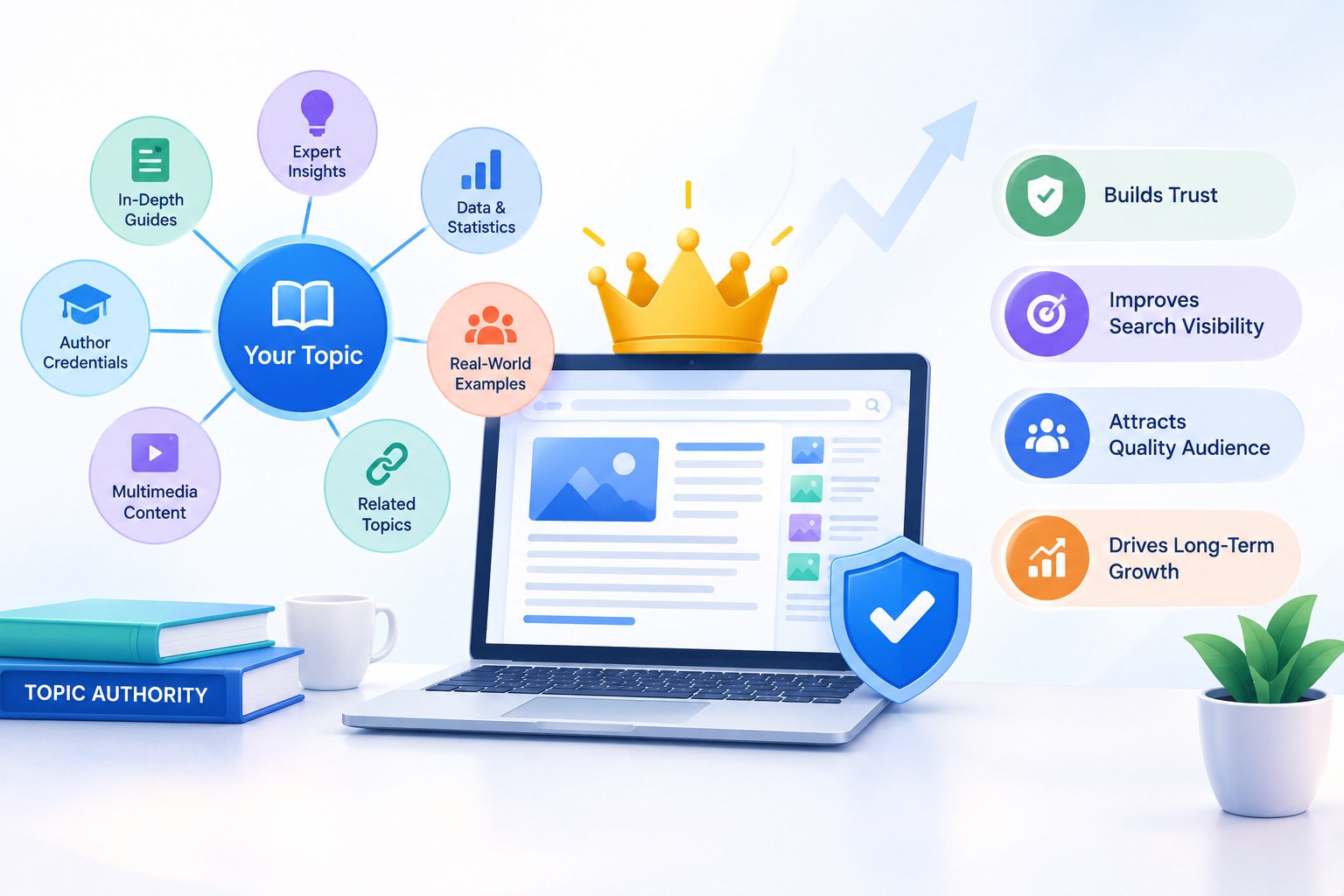
A single article rarely establishes expertise across an entire subject. Build a connected collection of useful pages around your main services, audience needs, and industry topics.
For example, an SEO agency could publish supporting resources on technical SEO, local SEO, structured data, content optimisation, AI search visibility, and digital PR. Link related articles naturally so readers can explore the subject in greater depth.
Credible external mentions can also strengthen your online reputation. Seek relevant industry publications, genuine editorial coverage, expert contributions, and partnerships that provide meaningful information to readers. Avoid buying links or creating low-quality guest posts solely to manipulate rankings.
These are among the best SEO strategies to improve AI search visibility because they support discoverability, reputation, and subject relevance without relying on a single platform-specific tactic.
8. Use Answer Engine Optimisation and AI Content Optimisation
Answer engine optimisation (AEO) focuses on making content useful for direct-answer experiences, including featured snippets, voice assistants, and certain AI-powered search features.
Effective AI content optimisation combines that answer-focused approach with the broader principles of helpful content and sound SEO. It does not mean generating hundreds of low-quality AI-written pages or repeatedly inserting phrases such as “best company” into every paragraph.
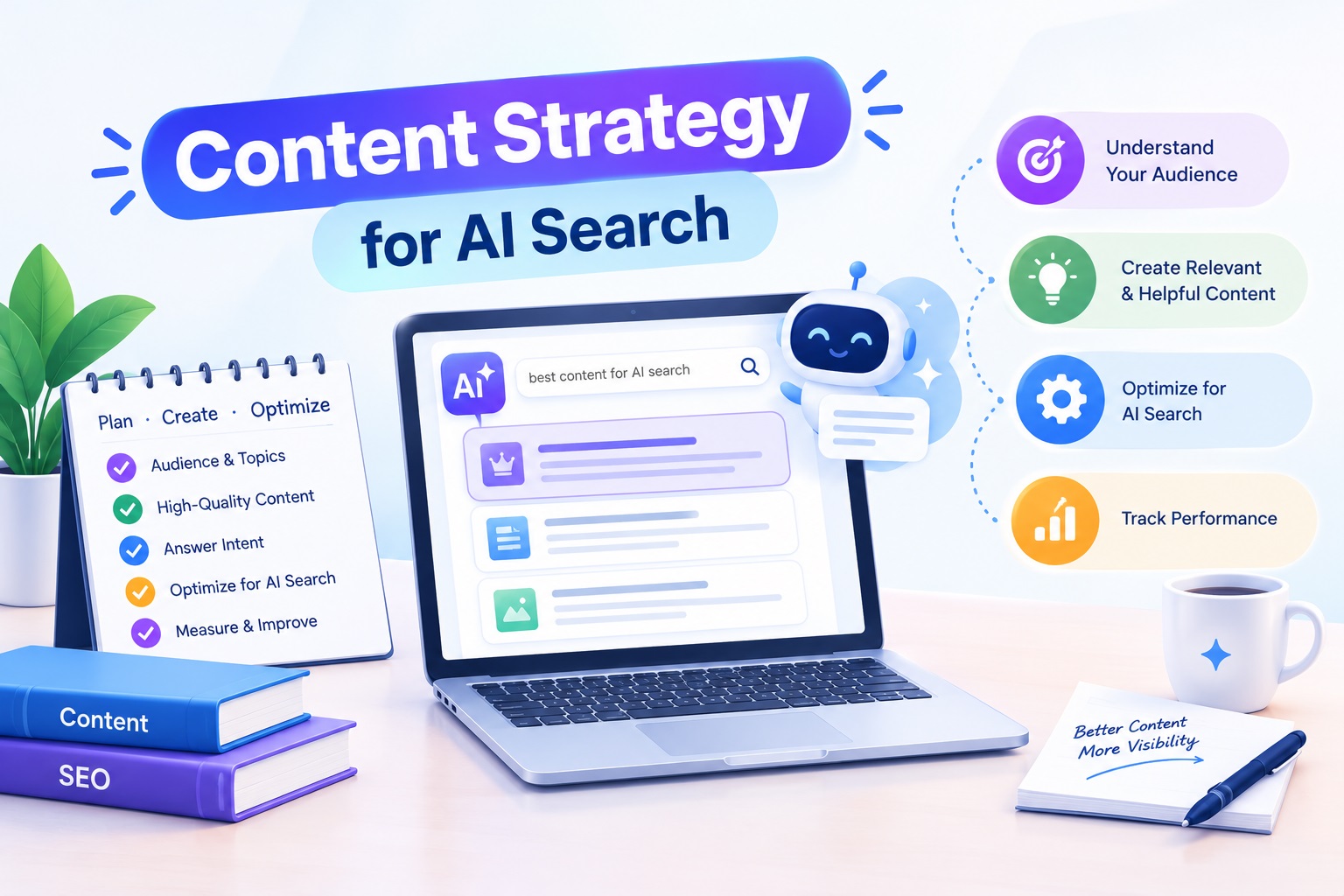
Instead, identify the questions your audience asks before purchasing a product or service. Answer those questions accurately, explain your recommendations, and distinguish verified facts from opinions or estimates.
Use AI tools to assist with research, outlining, and editing when appropriate, but review the final content for accuracy, originality, and usefulness. Human oversight is especially important for statistics, financial claims, technical instructions, and information that changes frequently.
9. Measure AI Search Citations and Referral Traffic
AI search optimisation should be measured rather than treated as a one-time content task. To understand how to measure website citations in AI search results, establish a repeatable monitoring process.
Track relevant queries across supported AI search platforms and record whether your brand appears, whether your website is cited, which URL is referenced, and which competing sources appear. Repeat the checks periodically because AI answers can change.
Use Google Search Console to monitor search impressions, clicks, queries, and indexing performance. Use your analytics platform to identify referral sessions from AI services where referral information is available. Track qualified enquiries and conversions as well as visits.
There is no single universal dashboard that captures every AI citation across every platform. Manual checks, referral reports, and specialist monitoring tools can provide complementary evidence.
10. Turn AI Search Visibility Into Business Opportunities
Getting cited is valuable only when it helps your audience discover useful information and take a relevant next step.
Make sure your website clearly explains your services, experience, location where relevant, and areas of expertise. Publish detailed service pages, answer common customer questions, and provide transparent contact information.
If you want to know how to get your website mentioned in AI-generated answers or how to get your business recommended by AI search engines, focus on building a consistent, credible digital presence. Recommendations depend on the user’s question, available evidence, platform behaviour, and many other factors outside your control.
Likewise, if your objective is to get organic traffic from AI search engines, ensure that cited pages offer a compelling reason to visit. Useful templates, original insights, detailed examples, and practical resources can give users a reason to click through.
Conclusion: Build a Website AI Search Can Trust
Getting your website cited in AI search results is an ongoing process that combines technical accessibility, helpful content, topical expertise, and credible online visibility. There is no guaranteed shortcut, but a consistent strategy can improve your chances of being discovered and referenced.
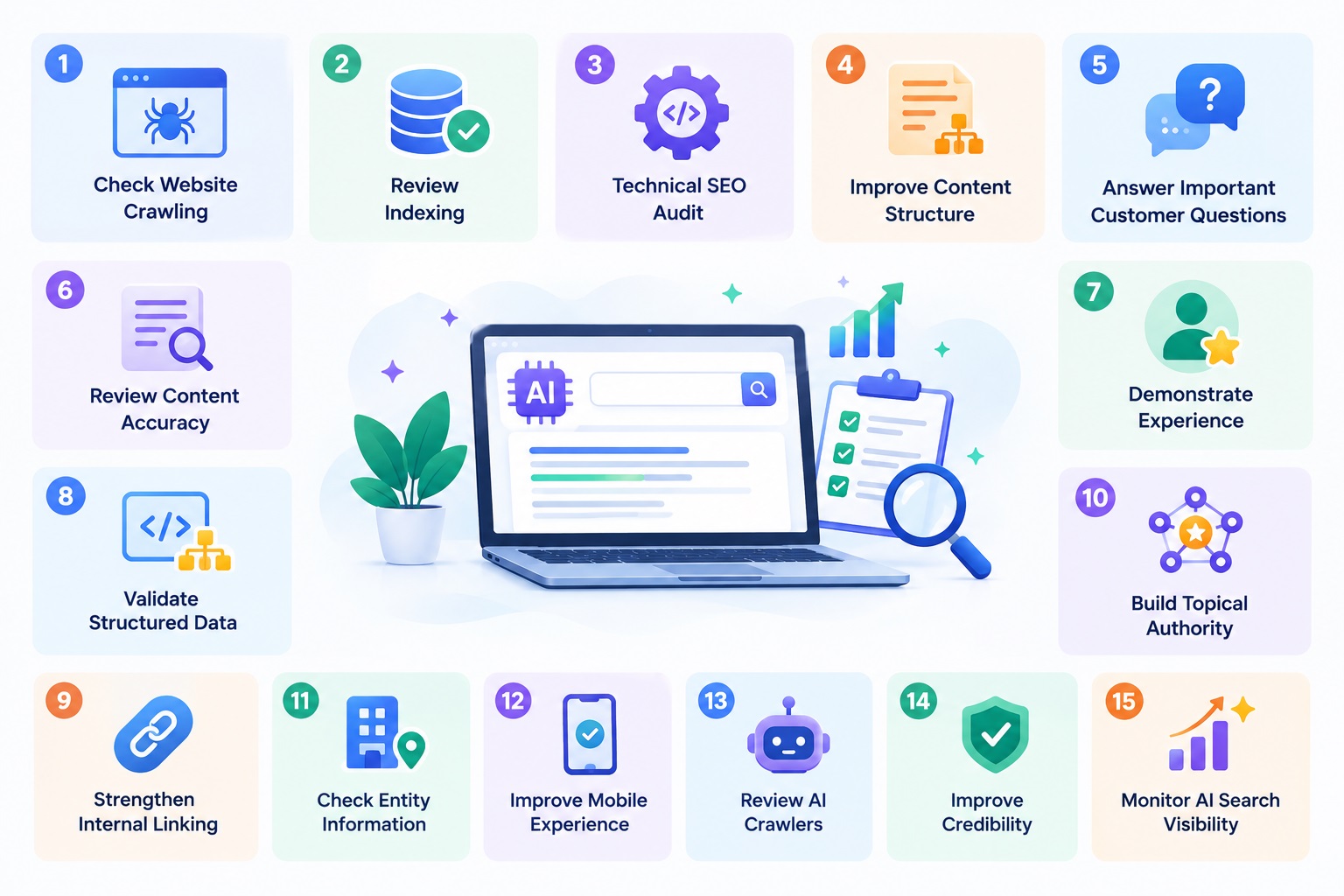
Start by auditing your important pages, improving their structure, publishing original information, and monitoring how your content appears across AI search platforms. Treat AI SEO as an extension of sound SEO practices rather than a replacement for them.
Want to improve your website’s visibility across traditional and AI-powered search? SEOBuckinghamshire can help you strengthen your SEO foundations, develop a content strategy, and identify practical opportunities to improve your online presence.
If you’re looking for expert SEO services to help manage content audits, updates, and optimization strategies, reach out to SEO Buckinghamshire—a leading digital agency in the UK with over 10 years of experience in SEO, web design, and digital marketing.