Search is evolving beyond traditional blue links. Today, users increasingly turn to AI-powered search experiences to ask questions, compare solutions, discover businesses, and receive direct answers. For businesses, this change creates a new challenge: creating content that attracts visitors through traditional search engines while remaining useful and discoverable in AI-generated answers.
A successful content strategy must now consider search intent, topical authority, content quality, and how information is structured. Traditional search engine optimisation remains important, but businesses can strengthen their approach by incorporating AI SEO, Generative Engine Optimisation (GEO), and Answer Engine Optimisation (AEO).
In this guide, we explain how to build a content strategy for AI-powered search that supports long-term organic visibility and helps your business become a trusted source of information.
What Is an AI Search Content Strategy?
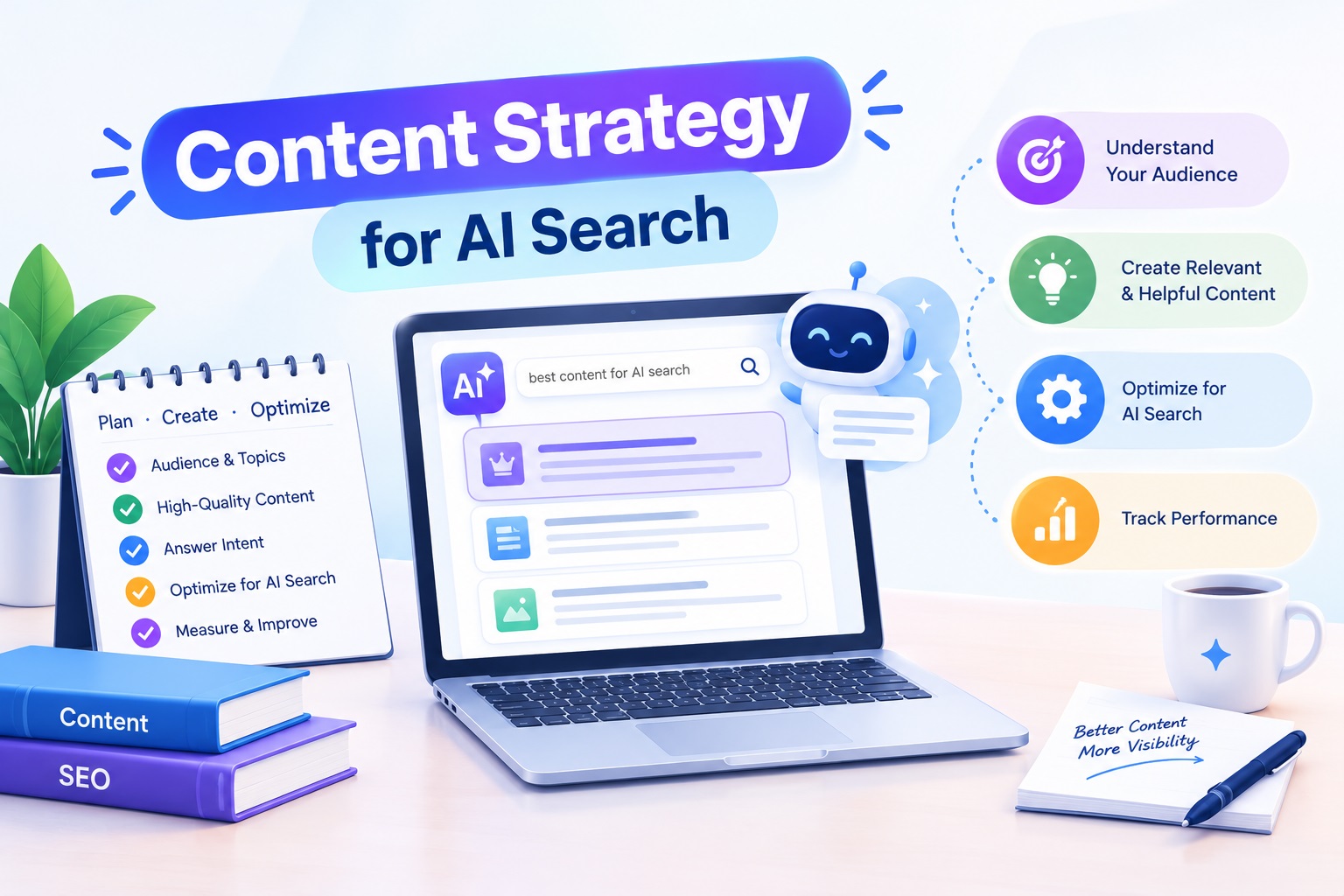
An AI search content strategy is a structured plan for creating, organising, and improving website content so it effectively answers users’ questions across traditional search engines and AI search platforms.
Unlike a conventional SEO content strategy that often focuses on ranking individual pages for target keywords, an AI content strategy also considers how different pages work together to demonstrate expertise and provide complete answers to related questions.
For example, a digital marketing agency could publish content about technical SEO, content optimisation, local search, GEO, and AEO. When these articles are connected through relevant internal links and supported by original insights, they help establish topical authority.
The objective is not simply to appear in AI-generated answers. It is to create genuinely helpful content that deserves to be discovered, referenced, and trusted.
1. Understand Your Audience and Search Intent
Every effective content strategy begins with understanding what your audience wants to know. AI search users often ask detailed, conversational questions instead of entering short keywords.
Rather than searching only for “AI SEO”, a user might ask, “How can I optimise my website to appear in AI search results?”
To understand these needs, research customer questions, keyword variations, search suggestions, sales enquiries, and discussions relevant to your industry.
Group the findings into informational, commercial, and transactional intent. Informational searches require educational content, commercial searches need comparisons and evaluations, while transactional searches benefit from service pages, pricing information, and clear next steps.
This research helps you decide which topics deserve dedicated pages and which questions should be answered within existing articles. It also provides a stronger foundation for understanding how to create an AI search content strategy that serves real customer needs.
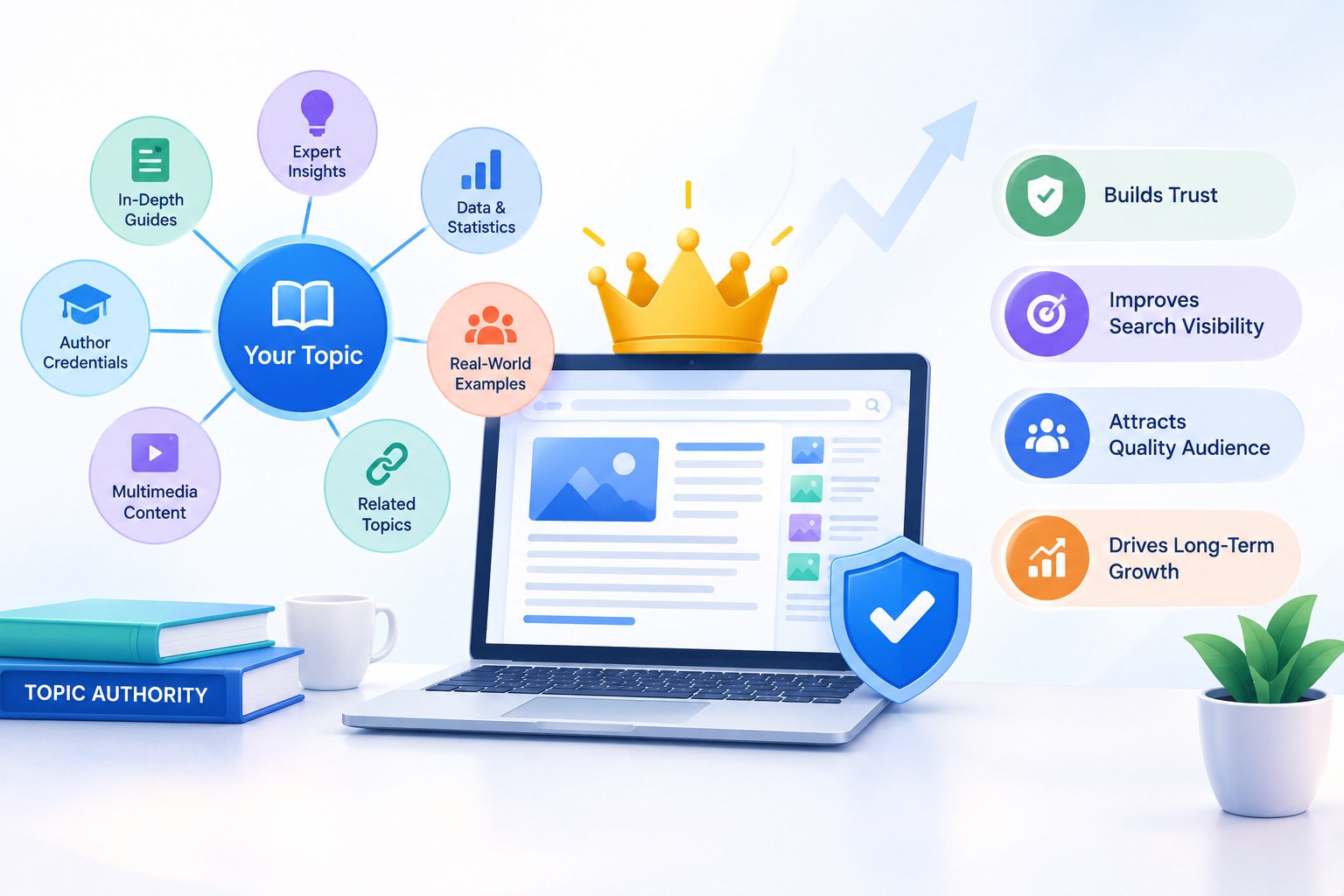
2. Build Topic Clusters to Establish Topical Authority
Publishing isolated blog posts rarely creates a comprehensive resource for your audience. A stronger approach is to organise related topics into clusters around your main services, products, or areas of expertise.
Start with a central topic and develop supporting articles that answer specific questions. For example, a website focusing on search marketing might build a cluster around AI search optimisation, including content planning, AI citations, structured data, keyword research, and performance measurement.
Link relevant articles together and connect them to the main topic page. This helps users navigate related information and gives search engines additional context about the relationships between your pages.
Building topical authority requires more than publishing a large volume of content. Each page should offer distinct value, address a meaningful search need, and demonstrate knowledge of the subject.
A well-organised topic cluster also supports semantic SEO by covering related concepts, terminology, entities, and questions naturally instead of relying on repeated exact-match keywords.
3. Create Helpful, Original Content for AI Search
High-quality content remains the foundation of successful AI search optimisation. AI search engines need accessible, relevant information to understand a page and determine whether it may help answer a user’s question.
Focus on creating original content based on your expertise, research, practical experience, and audience insights. Explain complex concepts in plain language, include specific examples, and provide actionable recommendations rather than repeating information already available across competing websites.
Use descriptive headings to organise the article logically. Answer important questions directly before expanding on the details. Short explanations, relevant lists, comparison tables, and step-by-step instructions can improve readability when they genuinely suit the subject.
When considering how to optimise website content for AI search engines, remember that clarity matters more than writing specifically for a machine. Explain what a product or service does, who it helps, what problems it solves, and how it differs from alternatives.
Avoid unsupported claims, generic introductions, and unnecessary repetition. Original, useful content gives readers a reason to trust your website and return for more information.
4. Combine Traditional SEO with GEO and AEO
AI-powered search does not make traditional SEO obsolete. Technical accessibility, relevant content, internal linking, and sound website structure remain important foundations for organic discovery.
However, businesses can expand their approach through two related disciplines.
Generative Engine Optimisation (GEO) focuses on improving the likelihood that useful, authoritative content is discovered, referenced, or cited in generative AI responses. A practical GEO strategy includes publishing original insights, supporting claims with credible evidence, developing topical depth, and maintaining consistent information across relevant pages.
Answer Engine Optimisation (AEO) focuses on making content effective at answering specific questions. An AEO strategy may involve clear question-based headings, concise definitions, helpful FAQs, and well-structured explanations.
For example, an article about website performance could directly answer “Why is my website loading slowly?” before explaining common causes and solutions.
Together, search engine optimisation, GEO, and AEO create a balanced approach. Rather than treating them as separate campaigns, integrate them into your existing content marketing process.
5. Perform Keyword Research for AI-Powered Search
Keyword research remains essential, but it should go beyond identifying high-volume search terms. Your research should uncover the questions, problems, comparisons, and follow-up queries that matter to your audience.
Start with a primary keyword for each page, then identify relevant secondary keywords and long-tail search phrases. Include natural variations and related concepts where they fit the subject.
For example, a page targeting “AI search optimisation” could also address how to improve content visibility in AI search results, how AI-generated answers work, and how businesses can measure their search presence.
Do not create separate pages for every minor keyword variation. Combine closely related questions when a single comprehensive page can satisfy the same search intent.
This approach makes content optimisation more meaningful and helps you avoid keyword cannibalisation, where multiple pages compete for similar searches.
The goal is to create SEO content that provides complete, relevant answers instead of simply inserting keywords into headings and paragraphs.
6. Structure Content for Readability and Discoverability
Content structure helps readers find information quickly and gives search engines clearer context about each page.
Use a logical heading hierarchy, descriptive page titles, concise paragraphs, and meaningful internal links. Place important information near the beginning of the relevant section, then provide additional context, examples, and practical guidance.
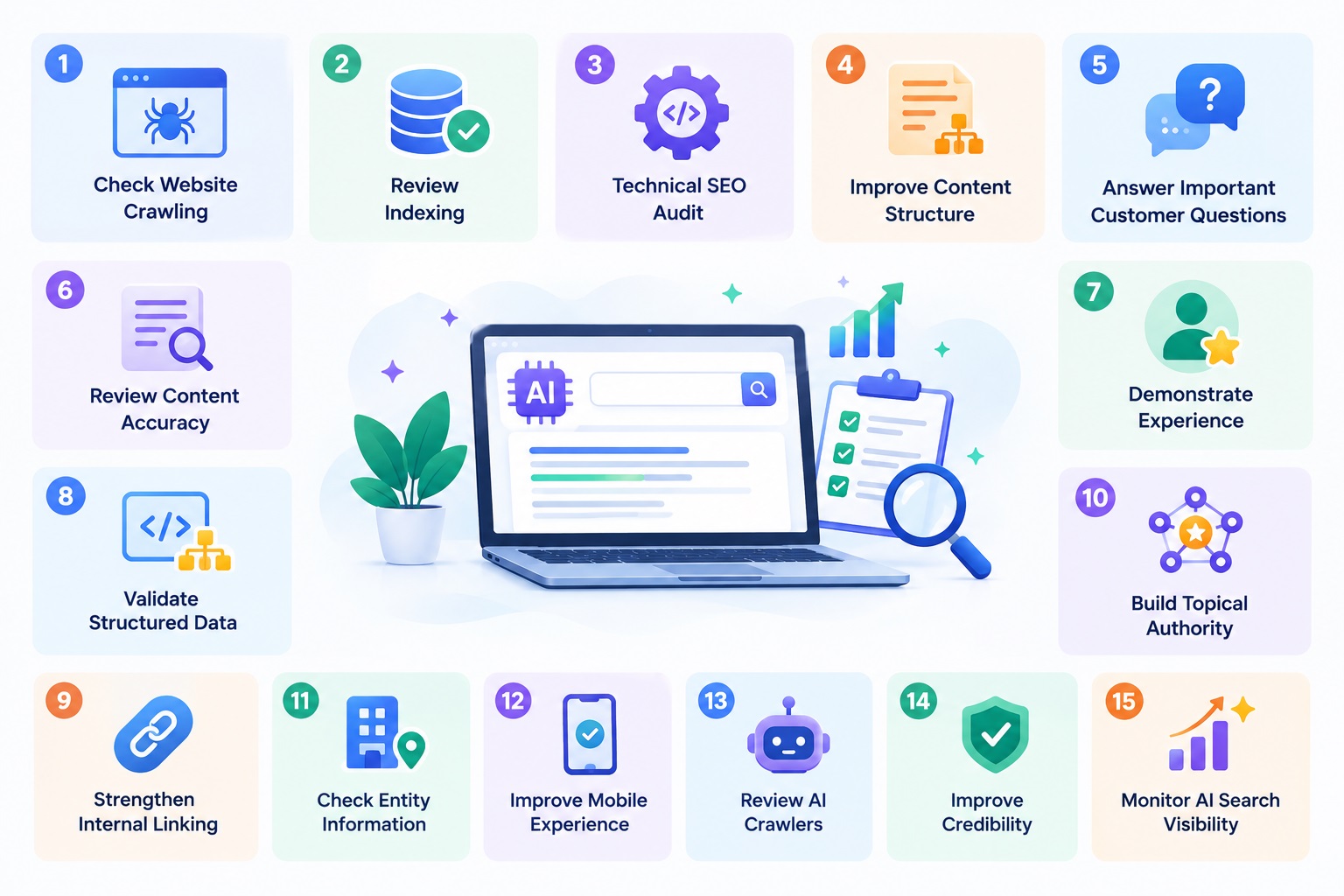
Where appropriate, implement relevant structured data using supported schema types. Keep the markup accurate and consistent with the visible content. Structured data can clarify page meaning, but it does not guarantee inclusion in AI-generated answers.
Review technical factors such as crawlability, indexability, mobile usability, page speed, and canonical URLs. Ensure important content is available in a format search engines can access.
These fundamentals support AI search visibility while continuing to strengthen your overall website experience.
7. Measure AI Search Visibility and Refine Your Strategy
A content strategy should evolve based on performance rather than assumptions. Track organic search traffic, impressions, clicks, keyword rankings, engagement, and conversions using suitable analytics and search reporting tools.
Where data is available, monitor visits referred by AI platforms, relevant brand mentions, and citations in AI-generated responses. Because AI answers can vary by query, platform, and context, treat individual observations as useful signals rather than definitive rankings.
Review underperforming pages to identify missing information, outdated advice, weak internal links, or mismatches between content and search intent. Update them with meaningful improvements instead of changing dates without adding value.
Measure whether content attracts the right audience and supports business goals. More visibility is useful, but qualified enquiries, relevant leads, and customer engagement provide a clearer picture of commercial impact.
Build a Future-Ready Content Strategy for AI Search
Building an effective content strategy for AI-powered search requires a combination of audience research, topical authority, original content, technical SEO, and continuous improvement. GEO and AEO can strengthen this foundation by helping businesses produce information that is relevant, clear, and useful across evolving search experiences.
Start by identifying your audience’s most important questions, creating comprehensive topic clusters, improving existing pages, and measuring results consistently. Avoid chasing every new AI trend or publishing content solely to satisfy algorithms.
If you’re looking for expert SEO services to help manage content audits, updates, and optimization strategies, reach out to SEO Buckinghamshire—a leading digital agency in the UK with over 10 years of experience in SEO, web design, and digital marketing.