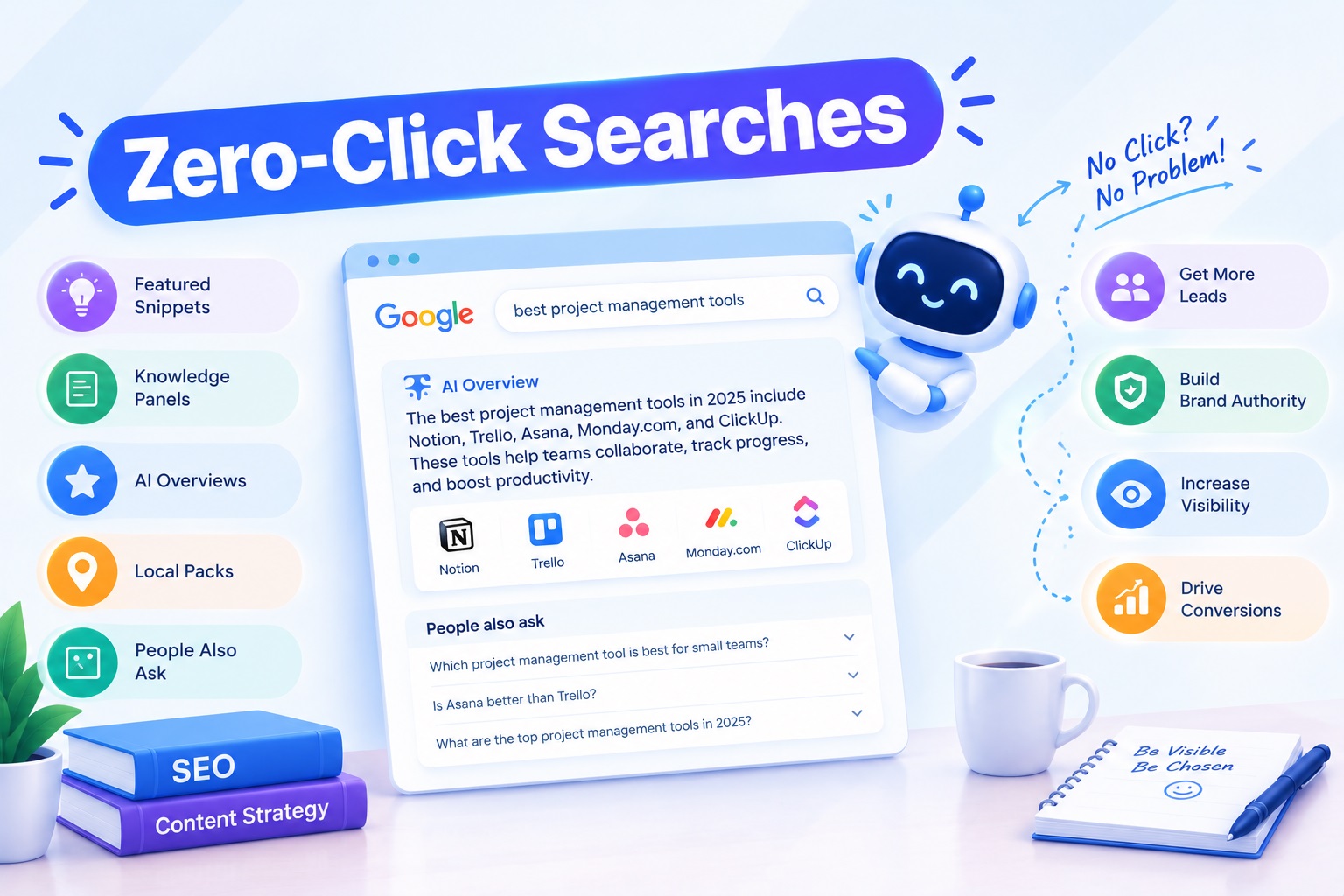
Search behaviour is changing as people increasingly use search engines, AI-powered tools, and conversational assistants to find information online. While traditional search engines help users discover relevant web pages, answer engines aim to provide direct answers to their questions. This shift has made SEO vs AEO an important topic for businesses that want to improve their online visibility.
Search Engine Optimisation (SEO) has long been a core part of digital marketing. However, Answer Engine Optimisation (AEO) is gaining attention as users expect faster, more direct, and more relevant answers. Understanding how these approaches work together can help businesses create useful content, reach their target audience, and remain visible across changing search experiences.
What Is SEO?
SEO stands for Search engine optimization. It’s a process of improving a website so that its pages can appear more prominently in organic search results. It involves optimising content, website structure, page speed, technical performance, and other factors that help search engines discover, understand, and rank web pages.
A successful SEO strategy focuses on understanding what people search for and providing relevant, helpful information that satisfies their needs.
Common SEO activities include:
- Keyword research: Identifying the search terms your target audience uses.
- On-page SEO: Optimising page titles, headings, meta descriptions, URLs, and content.
- Technical SEO: Improving crawling, indexing, mobile usability, and website performance.
- Content creation: Publishing accurate, original, and useful information.
- Link building: Earning relevant backlinks that help establish authority and credibility.
SEO remains essential for businesses because it can attract qualified organic traffic, build brand awareness, and support long-term digital growth.
What Is AEO?
Answer Engine Optimisation (AEO) is the process of structuring and improving online content so that answer engines and AI-powered systems can identify relevant information and use it to respond to users’ questions.
Rather than focusing only on rankings and website visits, AEO places greater emphasis on clear answers, factual accuracy, context, and content that directly addresses user intent.
For example, someone searching for “What is website hosting?” may want a quick explanation rather than a list of websites to explore. Content that provides a concise, accurate definition followed by a detailed explanation can be useful for both traditional search engines and answer-oriented experiences.
AEO activities commonly include:
- Answering specific questions clearly and directly.
- Using descriptive headings and logical content structures.
- Adding relevant FAQs where they genuinely help readers.
- Providing accurate information supported by trustworthy sources.
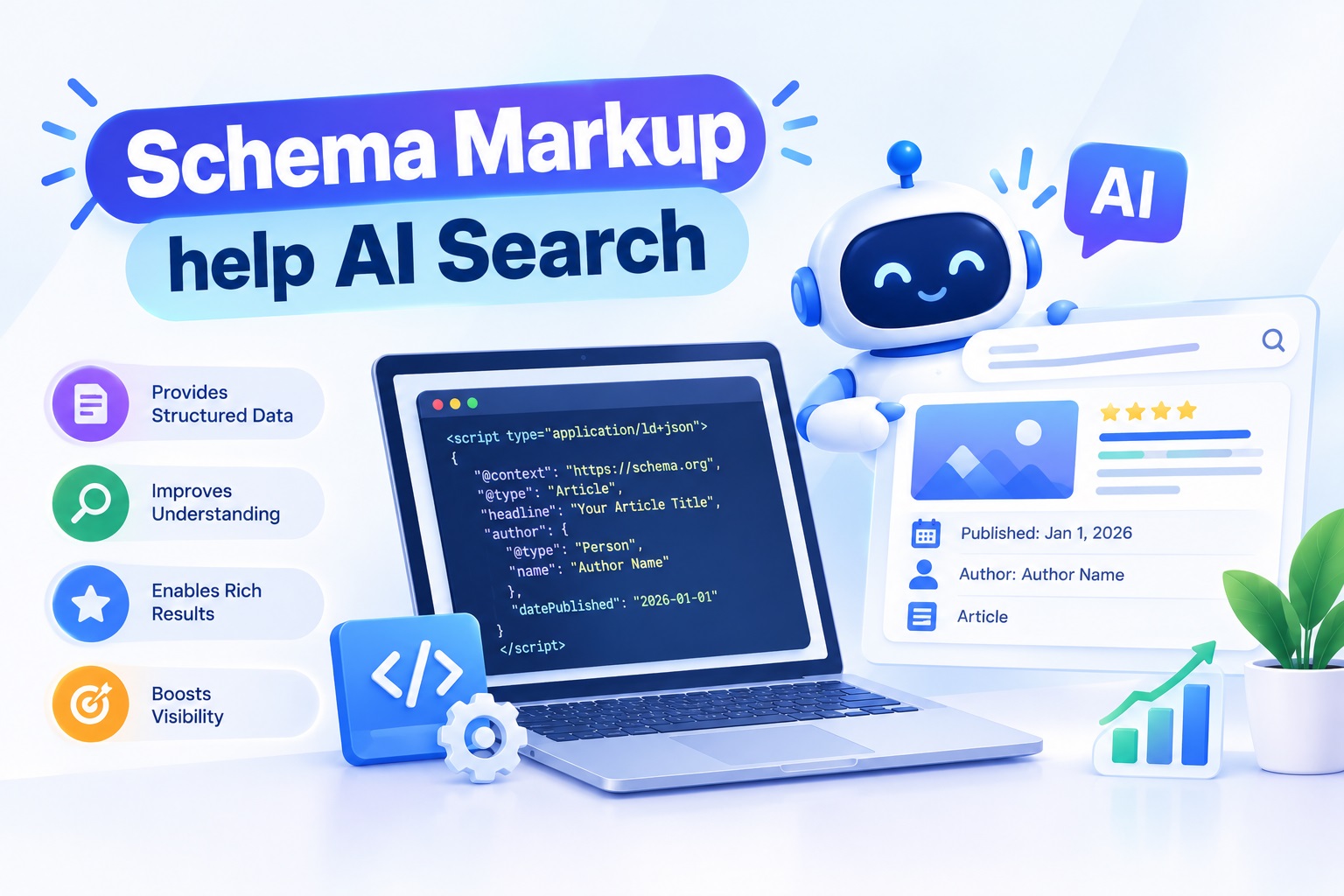
- Using appropriate structured data to clarify page content.
- Keeping information consistent and up to date.
Understanding how does Answer Engine Optimisation work? starts with recognising that answer engines need useful, understandable information to generate or retrieve relevant responses. However, inclusion in AI-generated answers is never guaranteed.
SEO vs AEO: What’s the Difference?
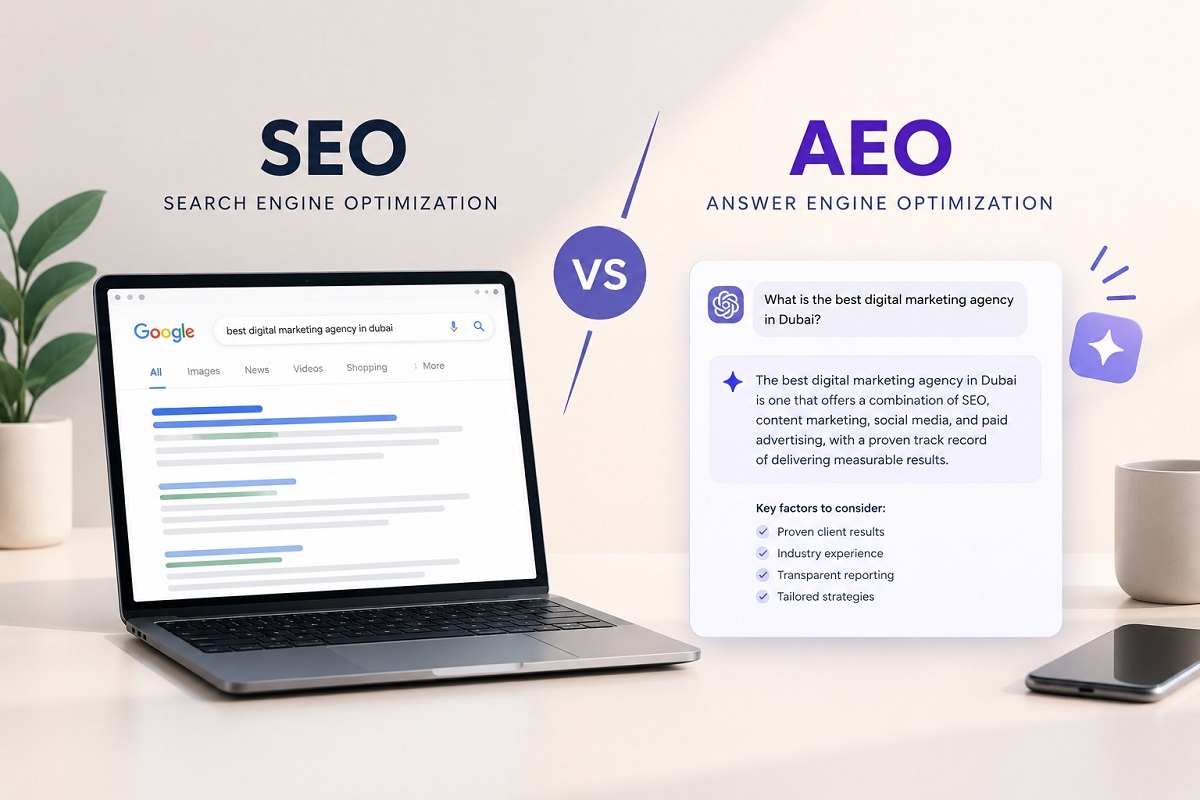
The main difference between SEO and AEO is their primary focus. Search Engine Optimisation (SEO) aims to improve a website’s visibility in organic search results, while Answer Engine Optimisation (AEO) focuses on making content easy for answer engines and AI-powered systems to understand and use when responding to users’ questions.
SEO helps users discover relevant web pages through search engines such as Google. It involves keyword research, content optimisation, technical SEO, website performance, and building authority through relevant backlinks.
AEO focuses on providing clear, accurate, and direct answers to specific questions. It involves structuring content with descriptive headings, answering common questions, providing reliable information, and using structured data where appropriate.
Both approaches aim to connect users with useful information. Rather than choosing one over the other, businesses should combine SEO and AEO to improve their visibility across traditional search results and AI-powered search experiences.
How Does AEO Differ From Traditional SEO?
When considering how does AEO differ from traditional SEO, it helps to look at how content serves different user needs.
Traditional SEO often targets keywords and search intent to help a page compete in search results. For example, a page about business email hosting might cover features, pricing, security, and provider comparisons.
AEO builds on this approach by ensuring that specific questions within the topic receive clear answers. The same page might include a concise explanation of business email hosting, a comparison of professional and free email services, and answers to common security questions.
SEO helps users discover the page, while AEO-oriented formatting makes relevant information easier to identify and understand. Both approaches benefit from useful content, clear structure, accuracy, and a positive user experience.
Why Is Answer Engine Optimisation Important?
Understanding why is Answer Engine Optimisation important begins with changing user expectations. People increasingly want concise answers and practical recommendations without having to search through several pages.
For businesses, this creates additional opportunities to demonstrate expertise and become part of the information users encounter during their research.
The benefits of AEO for businesses and websites include:
- Greater visibility: Useful content may be surfaced in answer-focused search experiences.
- Brand awareness: Users may encounter your business while researching relevant topics.
- Stronger credibility: Accurate, helpful explanations can demonstrate subject knowledge.
- Better content structure: Answer-focused writing can make pages easier to navigate.
- Potential referral opportunities: Some AI-powered experiences provide links that can lead users to source websites.
However, AEO does not guarantee more traffic or AI citations. Some answer experiences satisfy users without generating a website visit. Businesses should therefore evaluate visibility, referral traffic, engagement, and conversions together.
How to Optimise a Website for Answer Engines?
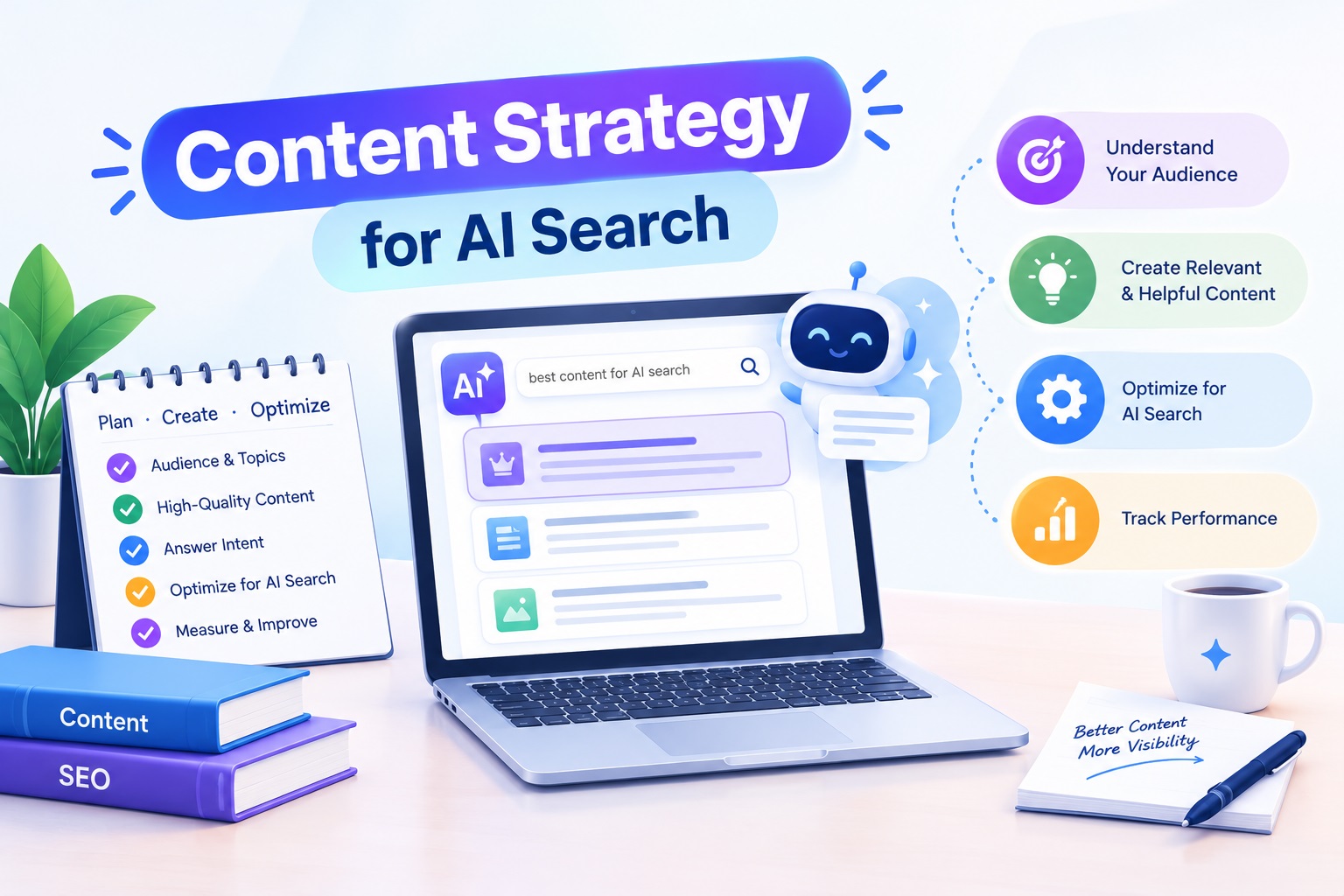
If you want to know how to optimise a website for answer engines, start by improving the usefulness and clarity of your existing content rather than creating separate pages for every question.
1. Understand Your Audience’s Questions
Research the questions customers ask before making a purchase or choosing a service. Use customer enquiries, keyword research, search suggestions, and relevant forums to identify genuine information needs.
2. Provide Clear, Direct Answers
Answer the main question near the beginning of the relevant section. Follow the short answer with supporting details, examples, and useful context. This structure helps readers understand the topic quickly.
3. Organise Content With Descriptive Headings
Use logical H2 and H3 headings to separate topics. Include question-based headings when they match real user searches, but avoid forcing keywords into every heading.
4. Demonstrate Experience and Expertise
Publish original insights, practical examples, accurate statistics, and information from credible sources. Keep author details and important business information accurate and consistent.
5. Improve Technical SEO
Make sure your website can be crawled and indexed, works well on mobile devices, and loads efficiently. Use relevant structured data correctly, but remember that schema markup does not guarantee inclusion in AI answers.
6. Keep Content Updated
Review important pages regularly. Update outdated claims, broken links, product details, and statistics so readers can rely on the information.
How to Improve Website Visibility in AI Search Results
To understand how to improve website visibility in AI search results, combine established SEO practices with content that answers questions thoroughly and accurately.
Start by creating helpful pages around your core topics. Link related articles together, use consistent terminology, and make important information easy to find. Where appropriate, include original research, expert commentary, comparisons, and detailed explanations that offer more value than generic summaries.
This is where AI Search and AI SEO become relevant. Businesses should consider how their content may be discovered through traditional search engines and AI-powered experiences, while avoiding claims that any particular optimisation technique guarantees AI visibility.
Track organic rankings, impressions, clicks, conversions, referral traffic from AI platforms, and relevant brand mentions where reliable measurement is possible. Use these insights to improve content based on actual audience needs.
SEO vs AEO: Which Is Better for Businesses?
For most businesses, the answer is both. Choosing between SEO and AEO is less useful than understanding how they complement one another.
SEO provides the foundation: discoverable pages, relevant content, technical accessibility, and authority. AEO adds an emphasis on answering questions clearly and making information easy to interpret.
For example, an ecommerce business can use SEO to optimise product and category pages while applying AEO principles to product questions, buying guides, comparisons, delivery information, and FAQs.
Similarly, a professional services company can use SEO to attract visitors searching for its services and AEO-oriented content to answer questions about pricing, processes, benefits, and common concerns.
The most effective SEO vs AEO strategies for better online visibility combine both approaches around the audience’s needs, business objectives, and measurable results.
Conclusion
The discussion around SEO vs AEO reflects a broader change in how people discover information online. SEO helps websites compete for organic search visibility, while AEO encourages businesses to present useful information in ways that support direct answers.
Rather than treating them as competing strategies, businesses should combine the strengths of both. Focus on accurate content, clear answers, technical performance, genuine expertise, and a helpful user experience. By building a strong SEO foundation and applying relevant AEO principles, your website can be better prepared for traditional search and evolving AI-powered discovery experiences.
If you’re looking for expert SEO services to help manage content audits, updates, and optimization strategies, reach out to SEO Buckinghamshire—a leading digital agency in the UK with over 10 years of experience in SEO, web design, and digital marketing.