Traditional SEO has long focused on improving rankings and attracting visitors to a website. However, search behaviour is changing. Users can now find answers directly on search engine results pages, explore featured snippets, view business information, and receive AI-generated responses without visiting another website.
This behaviour is known as zero-click searching, and it is changing how businesses approach online growth. Although fewer clicks can create challenges for website traffic, they also offer opportunities to increase brand visibility, establish expertise, and build trust before a potential customer visits your website.
The key is to look beyond clicks and develop a search engine optimisation strategy that makes your brand visible wherever your audience searches. In this guide, we explain how zero-click searches work and how businesses can use them to strengthen their online presence.
What Are Zero-Click Searches?
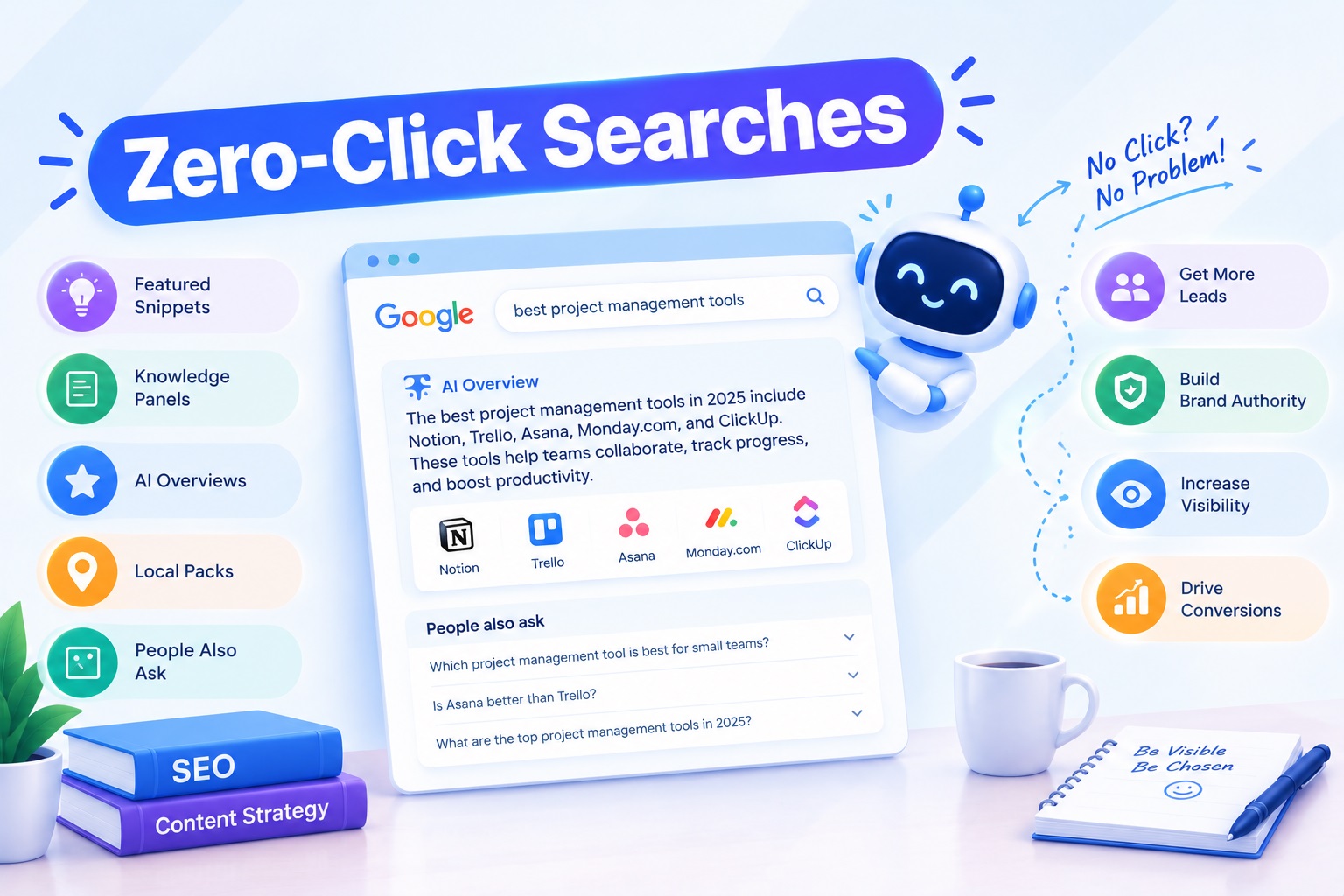
Zero-click searches occur when users find enough information directly on a search results page that they do not click through to an external website. Instead of visiting multiple pages, they may get their answer from a featured snippet, a knowledge panel, a local business listing, or an AI-generated response.
For example, someone searching for a digital marketing agency may see business details, reviews, service information, and other useful results before deciding whether to visit a website.
Google AI Overviews can also provide summaries of information from multiple sources, allowing users to explore a topic directly within the search experience.
Not every zero-click search is a lost opportunity. A user may notice your company name, learn about your services, or remember your expertise without clicking immediately. That exposure can contribute to brand awareness and influence future decisions.
However, visibility alone does not guarantee enquiries or sales. Businesses need to understand how zero-click behaviour fits into the wider customer journey.
Why Zero-Click SEO Matters for Businesses?
Zero-click SEO focuses on improving your brand’s presence across search results, even when users do not visit your website.
As search experiences become more informative, traditional measures such as rankings and organic traffic provide only part of the picture. A page may attract fewer clicks while still receiving valuable impressions and exposing your brand to potential customers.
For example, a business that regularly appears for relevant industry questions may become familiar to users researching a service. When those users are ready to make a purchase, they may search for the company by name or visit its website directly.
This makes search visibility an important part of a broader SEO strategy. Businesses should continue to pursue qualified website traffic while recognising that impressions, brand mentions, and visibility in relevant search features can also contribute to growth.
The goal is not to abandon traffic generation. It is to create more opportunities for potential customers to discover and trust your brand.
1. Optimise Content for Featured Snippets and SERP Features
Featured snippets display selected information from web pages directly in search results. Other SERP features, such as People Also Ask, knowledge panels, and relevant local results, can also help users discover information about a business or topic.
To improve your chances of appearing in suitable search features, create content that answers specific questions clearly and accurately.
Use descriptive headings, concise explanations, and logical page structures. If you are explaining a process, consider using numbered steps. If you are comparing services, a simple comparison table may help users understand the differences.
For example, a website design company could publish an article answering, “What does website maintenance include?” A direct explanation followed by practical details may make the content easier to understand.
There is no guarantee that Google will select your content for a featured snippet. Nevertheless, clear, useful information supports both readers and search engines while improving the overall quality of your website.
2. Strengthen Your Brand Visibility in AI Search
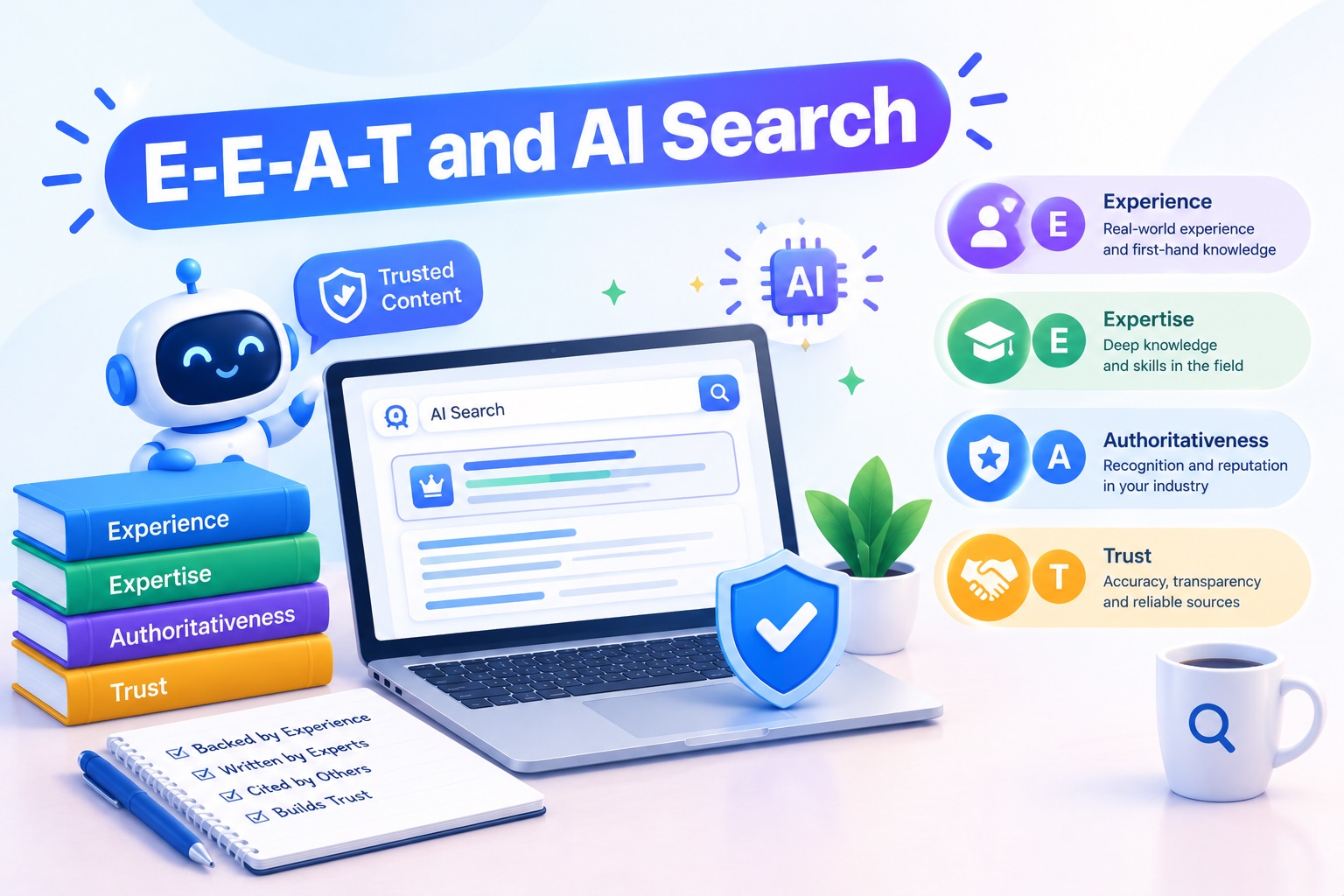
AI search is creating additional ways for people to discover businesses and learn about products or services. Experiences such as Google AI Overviews can summarise information and link to sources that help users explore a subject further.
To improve your brand visibility, publish reliable information that directly addresses your audience’s needs. Explain your services, share original insights, and support factual claims with credible evidence where appropriate.
Generative Engine Optimisation (GEO) focuses on improving the discoverability and potential citation of content in generative AI experiences. Answer Engine Optimisation (AEO) focuses on providing clear answers to relevant questions.
Both approaches can complement traditional SEO when they prioritise helpful content, technical accessibility, and genuine expertise.
Avoid writing solely to influence AI systems or repeatedly inserting your company name into articles. Instead, make your content useful enough to stand on its own. AI platforms select and present information according to their own systems, so inclusion in an AI-generated response cannot be guaranteed.
3. Build Brand Authority Through Helpful Content Marketing
Strong content marketing helps your business demonstrate what it knows and how it can solve customer problems.
Rather than publishing disconnected blog posts, develop a consistent collection of resources around your core services and areas of expertise. For a digital marketing agency, this could include guides about technical SEO, local search, website performance, content planning, and AI search optimisation.
Cover each topic thoroughly and connect related pages with relevant internal links. Share practical advice, explain common mistakes, and provide examples that help readers make informed decisions.
This approach can gradually strengthen brand authority by demonstrating consistent knowledge and reliability.
Keep your business information accurate across your website and relevant online profiles. Consistency helps users recognise your brand and reduces confusion when they encounter your company through different channels.
Most importantly, avoid publishing generic articles simply to increase content volume. Original insights and meaningful answers are more valuable than repetitive pages created around minor keyword variations.
4. Improve Organic Impressions and Search Visibility
Organic impressions indicate how often your website appears in unpaid search results. Monitoring impressions alongside clicks can reveal opportunities that traffic reports alone might overlook.
Use Google Search Console to review impressions, clicks, click-through rates, average positions, and the queries associated with your pages.
Look for relevant searches where your website receives impressions but attracts relatively few clicks. Investigate whether the page matches search intent, whether the title accurately communicates its value, and whether the search results already answer the user’s question.
A low click-through rate does not automatically mean a page is underperforming. The search query, ranking position, device, and type of search result can all influence behaviour.
Also monitor branded searches where possible. An increase in searches for your business name may indicate growing interest, although it can also result from advertising, offline activity, or other marketing efforts.
Use these insights to refine your content and focus on the audiences most likely to become customers.
5. Turn Zero-Click Visibility Into Business Opportunities
A zero-click interaction does not have to be the end of the customer journey. It can be an early step in building familiarity and trust.
Make sure your website clearly explains what your business offers, who it serves, and how potential customers can get in touch. Your contact information, service pages, case studies, and calls to action should be easy to find.
Maintain accurate business listings where relevant, encourage genuine customer reviews, and provide consistent information across your online presence.
You should also connect SEO with your wider digital marketing activities. Social media, email marketing, paid campaigns, and remarketing—where appropriate and privacy-compliant—can help you reach people who become interested in your brand through different channels.
Measure qualified enquiries, conversions, branded searches, and assisted conversions alongside organic traffic. This broader view can help you understand whether your search visibility contributes to meaningful business outcomes.
Remember that a person who sees your brand in search results may convert later, but not every impression leads to a sale.
6. Avoid Common Zero-Click Marketing Mistakes
One common mistake is focusing exclusively on impressions while ignoring business results. Visibility matters, but it should attract the right audience and support clear marketing objectives.
Another mistake is abandoning traditional SEO because AI search and zero-click results are becoming more prominent. Crawlability, indexability, useful content, relevant internal links, and a good user experience remain important.
Businesses should also avoid making exaggerated claims, publishing shallow answers, or creating misleading information to gain exposure in search results.
Instead, build a balanced strategy that combines useful content, accurate business information, technical optimisation, and regular performance reviews.
Grow Your Brand Beyond Website Clicks
Zero-click searches are changing how businesses measure success in organic search. Website traffic remains valuable, but it is no longer the only way to understand how people discover and engage with a brand.
By improving search visibility, creating helpful content, optimising for relevant SERP features, and building authority across AI search experiences, businesses can create more opportunities to be recognised and trusted.
At SEOBuckinghamshire, we believe sustainable search growth comes from combining proven SEO principles with an understanding of changing user behaviour. Focus on answering real questions, measuring meaningful outcomes, and maintaining a consistent online presence.
When your brand delivers value wherever potential customers search, you can build awareness today and create more opportunities for future enquiries and conversions.
If you’re looking for expert SEO services to help manage content audits, updates, and optimization strategies, reach out to SEO Buckinghamshire—a leading digital agency in the UK with over 10 years of experience in SEO, web design, and digital marketing.